Is USA invasion against I.R. of Iran tearing warp and woof of textile industry especially the polyester fabric

Author:
webadmin-site
Release Date:
21 September 2026
Comments:
the international effects of the US military invasion of Iran on the textile and polyester industries

USA and Israel attacked I.R. of Iran on Saturday, February 28, 2026, resulted Iran immediate response to block Hormuz Strait where 25% of global energy passes through it. About $20 billion to $25 billion ‌worth of petrochemical products pass ...

How is impact of war against Iran on textile sector globally

USA and Israel attacked I.R. of Iran on Saturday, February 28, 2026, resulted Iran immediate response to block Hormuz Strait where 25% of global energy passes through it. About $20 billion to $25 billion ‌worth of petrochemical products pass through the Strait annually, according to Rabobank, underscoring the fact that continued disruptions to this flow would push producers to pass the higher costs on to consumers. The Middle East accounted for over 40% of polyethylene exports in 2025

Till now, the strait is still under control of Iran and oil transportation is recorded to be the lowest quantity we can remember.

Crude oil, is not only the main source of energy worldwide, it is the motivating motor of global economy due its limitless derivatives such as polymers are used in textile industry. The price of oil increased as a result of Hormuz conflict and high tankers traffic, and increasing insurance cost on the other hand besides of lower production by Gulf countries compared to before USA attack.

 Polymers derived from oil can be classified to seven types as below with different properties and therefore different applications

Polyethylene (PE)

At the top of the polymer list, Polyethylene is always shows up. High production amount plus its wide range of applications make it as a most on demand polymer in the world. Polyethylene Terephthalate (PET), is a kind of PE with huge demand globally as a raw material for textile and packaging industries. 

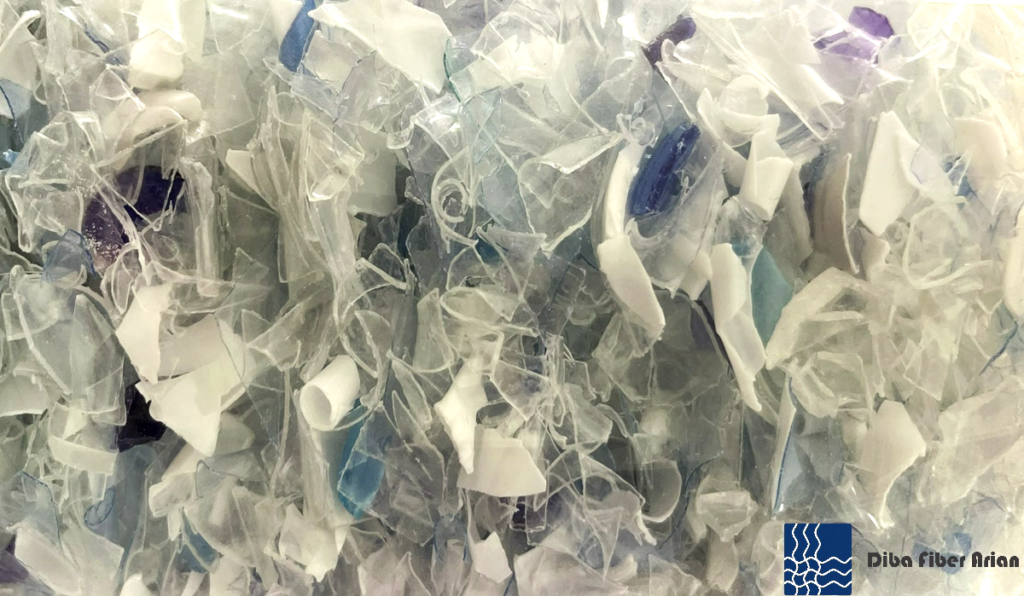
In 2025, global production of PET was 31 million tons with 2031 is estimated to be over 40 million tons. In textile sector, PET is referred to by its common name, polyester and its acronym PET is generally used in relation to packaging. PET used in non-fiber applications (like for packaging) makes up around 6% of world polymer production by mass. More than 60% fraction of PET produced for use as polyester fibers. Interesting to know that PET is the fourth-most-produced polymer after PE), (PP) and (PVC).When speaking about polyester fibers, we mean Synthetic Hollow Fibers and Synthetic Solid Fibers which are usually called Polyester Staple Fiber or PSF commercially.
polyster Fiber and war - Diba 1

Only in 2023, demand for PSF was touched 70 million tons for apparel and nonwoven industries. Nearly double the production of cotton as a natural fiber, polyester is till now the most commonly produced and consumed fiber. In Iran, Diba Fiber Arian Company, established in 2004, is among the top producers of hollow fiber and solid fiber with exporting to Iraq, Eurasia countries especially Russia and Persian Gulf countries. On time delivery, high quality, competitive price and customer care services made Diba Fiber Arian Company as a reliable partner among other manufacturers of polyester synthetic producers in Iran.

Polypropylene (PP)

The polymer is used in rigid containers, lids, hinges, automotive components, and also textiles.

Polyvinyl chloride (PVC)

PVC is one of the well-known of the seven types of polymers with its application in pipes, profiles, cables, windows, flooring, and medical products such as blood bags.

Polystyrene (PS)

PS is a low-cost products such as insulating foams, disposable tableware, dry food containers for dry foods and protective packaging.. Polyethylene terephthalate (PET)

PET is fundamental when discussing the seven types of polymers, especially in the food and beverage industry. It is used in bottles, containers, trays, and also in the manufacture of textile fibers such as polyester. As we mentioned earlier, its demand for textile industries especially for production of polyester fiber is growing fast. Both hollow and solid fiber are in demand for pillows, blankets and nonwoven industries.  To check price of hollow and solid fiber in Iran, you can directly email Diba Fiber Arian Company at sales@dibafiber.com or send message directly to Sales department on our WhatsApp +989108102254.

Polycarbonate (PC)

It is used in electrical equipment covers, helmets, visors, lenses and electronic devices.

Polyamides (Nylon)

The list of the seven types of polymers is closed by Polyamides as one of the most important materials in engineering applications like in gears, friction-bearing parts, belts, housings and also a wide variety of textile products.

After this brief introduction of main polymer categories, it’s time to know affective parameters on their prices. The cost of polymers, affect our living cost and welfare directly. Same as any other commodities, polymers same as PET and its derivatives like polyester fiber affected more by global demand. After that, price of crude oil affects them immediate after changing. Here, we consider effect of USA invasion on Iran on the price of polyester products including polyester fibers.

Increasing price of bottles, resulted lower consumption of mineral water and drinks in developing countries where bottle flakes are main raw material for produce PSF. PSF plants were assumed to be very beneficial in developing countries, however, increasing price of crude oil and  therefore PET material makes industry unexpected situation since starting war on February 28, 2026.

Soon after prices started to increase, textile markets showed sign of inflation; Iran war hits especially Asia’s polyester suppliers to global fast fashion and polyester production cost surges as petrochemical prices jump.The sooner effect of war may be seen on apparel cost, it will soon hits Sneakers also; as shoes and sneakers depend on petrochemical materials. Famous brands are being treated by increasing costs for fast-fashion retailers.

SURAT, India, April 24 (Reuters) – A surge in fossil fuel prices since the Iran war is squeezing polyester suppliers and garment makers across India and Bangladesh, threatening to raise like Zara and H&M.

Supply chain is disrupted as a result of USA invasion on Iran; polyester yarn manufacturers are paying at least 30% more for the petro derived material.

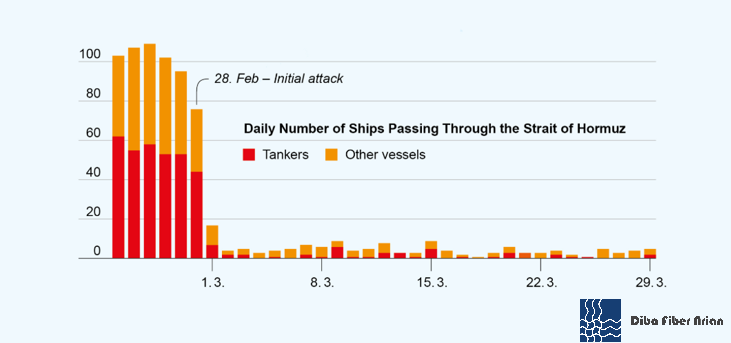
Below chart shows that number of vessels passes through Hormuz strait drop to less than 10 after war started.
polyster Fiber and war - Diba 1

The pain now obviously is being felt across the clothing supply chain as energy crisis had drastically pushed up the cost of chemicals, dyes, insurance and shipping.
https://en.dibafiber.com/

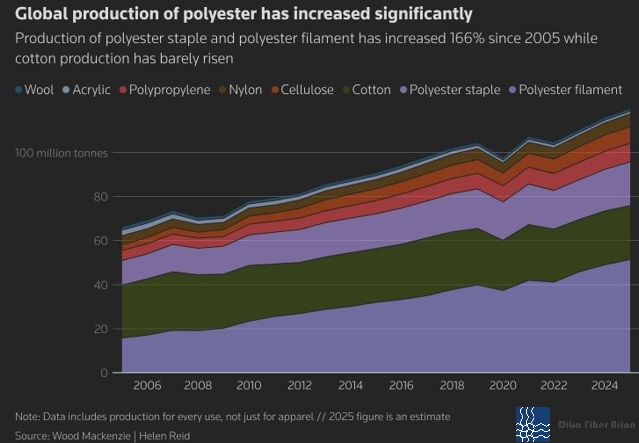
Accounting for 59% of global fiber production and used in many kind of dresses, polyester dominates the textile industry.  Trend for using polyester fiber of recycled source like PET bottles could cushion some of the oil-driven cost pressure for polyester fabric manufacturers. However, recycled polyester still accounts for about 12% of polyester production globally although production of polyester has increased in 2025 and before US attach on Iran. 
polyster Fiber and war - Diba 1

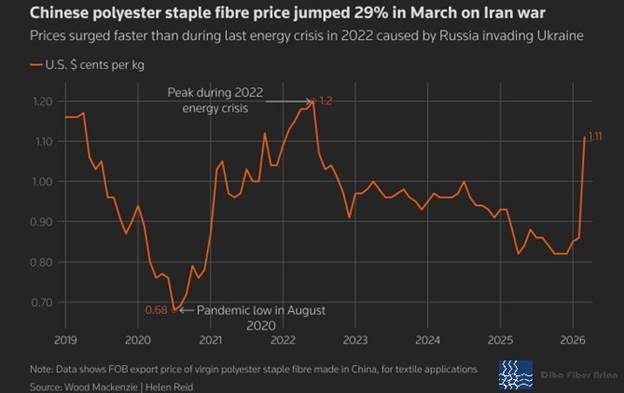
The price of polyester staple fiber (PSF) of China jumped around 30% after war started in Persian Gulf. The effect of Hormuz Strait inflict was significantly higher than the effect of Russia-Ukraine conflict.
polyster Fiber and war - Diba 1

Even manufacturers whose main products are based on cotton, polyester yarn price (sewing thread that feeds their sewing machines), fuel price and logistics cost, face higher prices compared with before war.

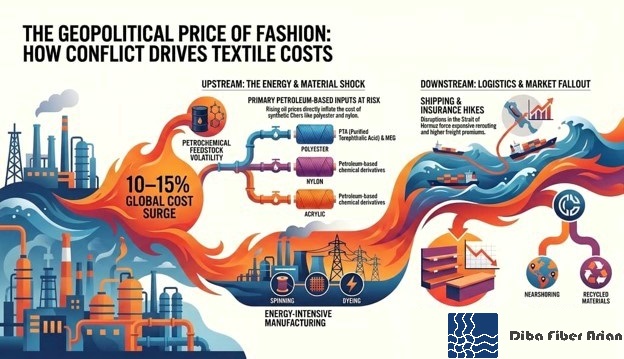
The below photo shows how textile industry relies on crude oil and petrochemicals and how shipping squeezed it after Iran war. 
Is USA invasion against I.R. of Iran tearing warp and woof of textile industry especially the polyester fabric?
How is impact of war against Iran on textile sector globally? 
USA and Israel attacked I.R. of Iran on Saturday, February 28, 2026, resulted Iran immediate response to block Hormuz Strait where 25% of global energy passes through it. About $20 billion to $25 billion ‌worth of petrochemical products pass through the Strait annually, according to Rabobank, underscoring the fact that continued disruptions to this flow would push producers to pass the higher costs on to consumers. The Middle East accounted for over 40% of polyethylene exports in 2025
Till now, the strait is still under control of Iran and oil transportation is recorded to be the lowest quantity we can remember. 
Crude oil, is not only the main source of energy worldwide, it is the motivating motor of global economy due its limitless derivatives such as polymers are used in textile industry. The price of oil increased as a result of Hormuz conflict and high tankers traffic, and increasing insurance cost on the other hand besides of lower production by Gulf countries compared to before USA attack. 
Polymers derived from oil can be classified to seven types as below with different properties and therefore different applications:

1. Polyethylene (PE) 
At the top of the polymer list, Polyethylene is always shows up. High production amount plus its wide range of applications make it as a most on demand polymer in the world. Polyethylene Terephthalate (PET), is a kind of PE with huge demand globally as a raw material for textile and packaging industries.  
In 2025, global production of PET was 31 million tons with 2031 is estimated to be over 40 million tons. In textile sector, PET is referred to by its common name, polyester and its acronym PET is generally used in relation to packaging. PET used in non-fiber applications (like for packaging) makes up around 6% of world polymer production by mass. More than 60% fraction of PET produced for use as polyester fibers. Interesting to know that PET is the fourth-most-produced polymer after PE), (PP) and (PVC).
When speaking about polyester fibers, we mean Synthetic Hollow Fibers and Synthetic Solid Fibers which are usually called Polyester Staple Fiber or PSF commercially. 
Only in 2023, demand for PSF was touched 70 million tons for apparel and nonwoven industries. Nearly double the production of cotton as a natural fiber, polyester is till now the most commonly produced and consumed fiber. In Iran, Diba Fiber Arian Company, established in 2004, is among the top producers of hollow fiber and solid fiber with exporting to Iraq, Eurasia countries especially Russia and Persian Gulf countries. On time delivery, high quality, competitive price and customer care services made Diba Fiber Arian Company as a reliable partner among other manufacturers of polyester synthetic producers in Iran. 
2. Polypropylene (PP)
The polymer is used in rigid containers, lids, hinges, automotive components, and also textiles.
3. Polyvinyl chloride (PVC)
PVC is one of the well-known of the seven types of polymers with its application in pipes, profiles, cables, windows, flooring, and medical products such as blood bags.
4. Polystyrene (PS)
PS is a low-cost products such as insulating foams, disposable tableware, dry food containers for dry foods and protective packaging. 
5. Polyethylene terephthalate (PET)
PET is fundamental when discussing the seven types of polymers, especially in the food and beverage industry. It is used in bottles, containers, trays, and also in the manufacture of textile fibers such as polyester. As we mentioned earlier, its demand for textile industries especially for production of polyester fiber is growing fast. Both hollow and solid fiber are in demand for pillows, blankets and nonwoven industries.  To check price of hollow and solid fiber in Iran, you can directly email Diba Fiber Arian Company at sales@dibafiber.com or send message directly to Sales department on our WhatsApp +989108102254. 
6. Polycarbonate (PC)
It is used in electrical equipment covers, helmets, visors, lenses and electronic devices. 
7. Polyamides (Nylon)
The list of the seven types of polymers is closed by Polyamides as one of the most important materials in engineering applications like in gears, friction-bearing parts, belts, housings and also a wide variety of textile products.
After this brief introduction of main polymer categories, it's time to know affective parameters on their prices. The cost of polymers, affect our living cost and welfare directly. Same as any other commodities, polymers same as PET and its derivatives like polyester fiber affected more by global demand. After that, price of crude oil affects them immediate after changing. Here, we consider effect of USA invasion on Iran on the price of polyester products including polyester fibers. 


Increasing price of bottles, resulted lower consumption of mineral water and drinks in developing countries where bottle flakes are main raw material for produce PSF. PSF plants were assumed to be very beneficial in developing countries, however, increasing price of crude oil and  therefore PET material makes industry unexpected situation since starting war on February 28, 2026.

Soon after prices started to increase, textile markets showed sign of inflation; Iran war hits especially Asia's polyester suppliers to global fast fashion and polyester production cost surges as petrochemical prices jump. 
The sooner effect of war may be seen on apparel cost, it will soon hits Sneakers also; as shoes and sneakers depend on petrochemical materials. Famous brands are being treated by increasing costs for fast-fashion retailers.

SURAT, India, April 24 (Reuters) - A surge in fossil fuel prices since the Iran war is squeezing polyester suppliers and garment makers across India and Bangladesh, threatening to raise like Zara and H&M.
Supply chain is disrupted as a result of USA invasion on Iran; polyester yarn manufacturers are paying at least 30% more for the petro derived material. 
Below chart shows that number of vessels passes through Hormuz strait drop to less than 10 after war started.
 
The pain now obviously is being felt across the clothing supply chain as energy crisis had drastically pushed up the cost of chemicals, dyes, insurance and shipping. 
 
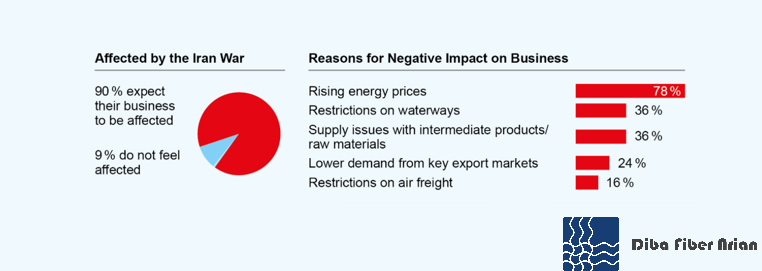
A survey among German industries published on March 31, 2026, shows impact of war on them. 


Accounting for 59% of global fiber production and used in many kind of dresses, polyester dominates the textile industry.  Trend for using polyester fiber of recycled source like PET bottles could cushion some of the oil-driven cost pressure for polyester fabric manufacturers. However, recycled polyester still accounts for about 12% of polyester production globally although production of polyester has increased in 2025 and before US attach on Iran.  
 
The price of polyester staple fiber (PSF) of China jumped around 30% after war started in Persian Gulf. The effect of Hormuz Strait inflict was significantly higher than the effect of Russia-Ukraine conflict. 
 

Even manufacturers whose main products are based on cotton, polyester yarn price (sewing thread that feeds their sewing machines), fuel price and logistics cost, face higher prices compared with before war. 


The below photo shows how textile industry relies on crude oil and petrochemicals and how shipping squeezed it after Iran war.   

Although Asian countries felt the impact soon after the US-Israel invasion of Iran, the effects extended far beyond the region. Rising costs of Polyester fiber—particularly hollow fiber and solid fiber used in nonwoven products—also put significant pressure on manufacturers in North America and Europe, squeezing profit margins across the segment.  Nonwoven products made from Polyester staple fiber (both hollow and solid types) serve a broad range of applications. These include everyday personal care items, healthcare products, and industrial goods such as filters. As a result, higher fiber prices quickly translated into increased production costs for a wide array of downstream industries.  
According to Fastmarkets’ price assessments based on March benchmarks, different grades of Polyester, polypropylene, and viscose fibers, along with superabsorbent polymer, recorded notable price increases in both the US and Europe. These rises ranged from 4% to 11% compared with February levels, reflecting the rapid transmission of cost pressures through the supply chain.  
At the same time, polymer suppliers stepped up their exports to Europe during March. This shift, combined with stronger demand from European buyers, created upward pressure on prices and led to a sharp increase in feedstock costs for the production of Synthetic Fiber even in the United States.  Looking further ahead, PET fiber prices in some countries have already climbed by as much as 28% since the beginning of the conflict. While Chinese PET fibers are also expected to rise, the pace of increase is projected to be more gradual.
Although Asian countries felt the impact soon after the US-Israel invasion of Iran, the effects extended far beyond the region. Rising costs of Polyester fiber—particularly hollow fiber and solid fiber used in nonwoven products—also put significant pressure on manufacturers in North America and Europe, squeezing profit margins across the segment.  Nonwoven products made from Polyester staple fiber (both hollow and solid types) serve a broad range of applications. These include everyday personal care items, healthcare products, and industrial goods such as filters. As a result, higher fiber prices quickly translated into increased production costs for a wide array of downstream industries. 

According to Fastmarkets’ price assessments based on March benchmarks, different grades of Polyester, polypropylene, and viscose fibers, along with superabsorbent polymer, recorded notable price increases in both the US and Europe. These rises ranged from 4% to 11% compared with February levels, reflecting the rapid transmission of cost pressures through the supply chain. 

At the same time, polymer suppliers stepped up their exports to Europe during March. This shift, combined with stronger demand from European buyers, created upward pressure on prices and led to a sharp increase in feedstock costs for the production of Synthetic Fiber even in the United States.  Looking further ahead, PET fiber prices in some countries have already climbed by as much as 28% since the beginning of the conflict. While Chinese PET fibers are also expected to rise, the pace of increase is projected to be more gradual.

Leave a Comment


Related Posts

the international effects of the US military invasion of Iran on the textile and polyester industries

Is USA invasion against I.R. of Iran tearing warp and woof of textile industry especially the polyester fabric

Are synthetic fibers more cost-effective than natural fiber

Are Synthetic Fibers More Cost-Effective Than Natural Fibers? A Review of Prices and Benefits

Price of Polyester Fibers in Iran

Price of Polyester Fiber in Iran

Polyester Fiber Manufacturer in Iran

Polyester Fiber Manufacturer in Iran

recycled

Recycling industry and recycled materials

Pet Flakes

Pet Flakes